How Can Drone Protection Be Prepared Before It Is Visible?
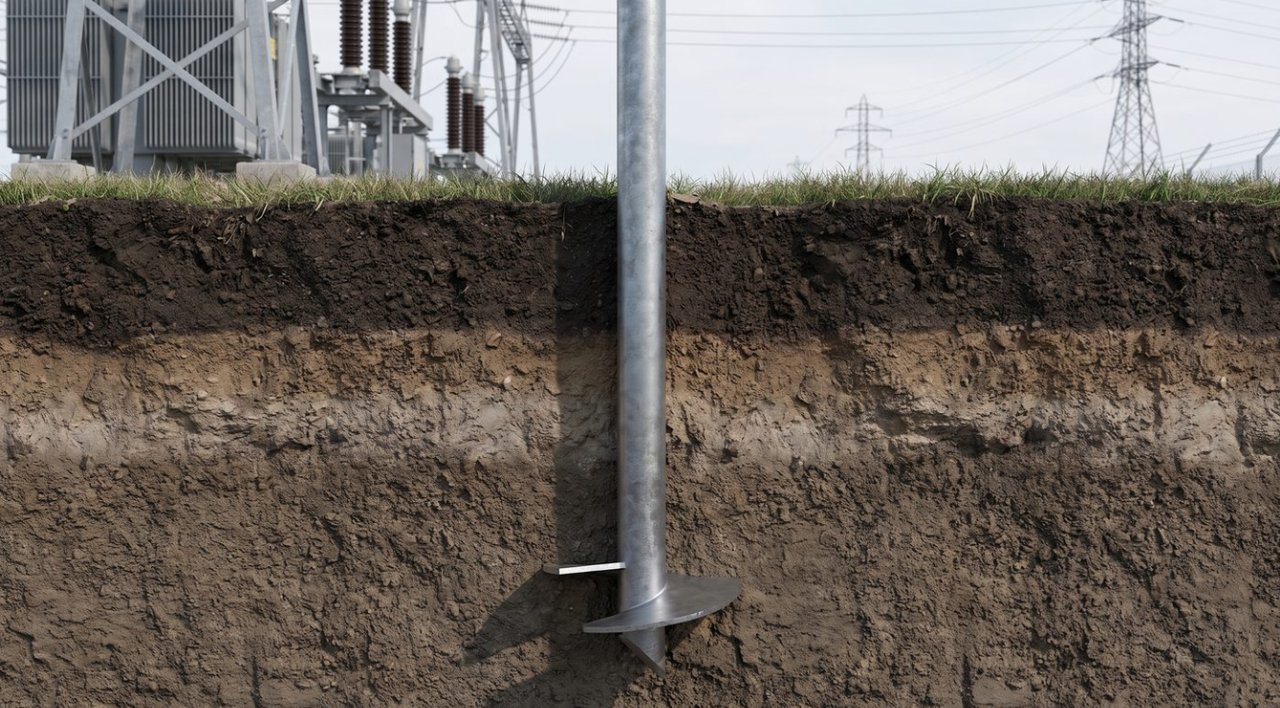
Prepared foundation points can allow the above-ground system to be deployed later, while the site remains usable in normal operation.
For some sites, the useful first step is not a visible structure, but a prepared foundation interface.
Physical drone protection is usually imagined as something visible.
A frame around the asset. A net above or beside it. A clear line between the protected area and the outside.
That may be the final form, but it is not always the best first step.
Many sites cannot or do not want to keep a visible protection structure in place every day. The area may be used for maintenance, vehicle movement, storage, deliveries or emergency access. In those cases, the question is not only how the final system will look.
The earlier question is what can be prepared without changing normal operation too much.
Start with the protection line
Before anything is installed, the protection line has to make sense.
It is easy to draw a boundary on a plan. It is harder to place one on a working site.
The line has to protect the asset, but it also has to leave enough room for access, inspection and normal operation. It has to consider gates, roads, foundations, cable routes, drainage, snow clearing and equipment that may need to be removed or replaced later.
This is why drone protection should not start with the net alone.
The netting is important, but it needs a position. The frame needs a geometry. The foundations need locations. If the protection line is wrong, the rest of the system is already compromised.
A site review is often the first useful step. Not a full design, but a practical check of what needs protection, where a structure could realistically stand and what should not be blocked.
The first visible structure does not have to be the first work
For suitable sites, it may be possible to prepare the foundation points before the frame and netting are installed.
Screw pile foundations are useful in this role because they do not require large excavation or cast-in-place concrete. Where the ground conditions, buried services and connection details allow it, the piles can be installed in advance and left ready for later connection.
They can be capped at ground level. In some cases, they can be kept low-profile or hidden just below the finished surface. The exact detail depends on the site, surface material and connection design, but the idea is straightforward: the site can be prepared without necessarily looking like the final protection system is already in place.
That can matter for critical infrastructure operators.
A site may not want a visible structure until the threat level, operating situation or customer decision requires it. At the same time, waiting until that moment to start every part of the work may be too slow.
Advance foundation preparation can reduce that gap.
Above ground can follow the project model
The visible parts of the system do not have to be handled in the same way on every project.
In one case, the frame and high-performance drone netting may be installed soon after the foundations. In another, the above-ground structure may be engineered and manufactured, then delivered or stored according to the agreed project model.
Storage is not something to promise generally without checking the case, but it can be arranged project by project where needed.
The important point is that the sequence can be discussed before the site is under pressure.
If the foundation interface is known, the frame can be designed around it. If the frame is known, the netting requirements can be reviewed with the geometry and distance to the asset. If the above-ground system is needed later, the project is not starting from the first question.
It has already answered some of the slow ones.
Not every site is the same
Advance preparation is useful only when it fits the site.
Ground conditions, buried services, operating restrictions, security rules and maintenance access all matter. So does the type of asset being protected and the kind of UAV threat being considered.
On some sites, a permanent visible structure may be the right answer. On others, a staged approach may be better: review the site, agree the protection line, prepare the foundation points and keep the visible structure for a later deployment phase.
The point is not to hide protection for the sake of hiding it.
The point is to avoid leaving every practical decision until the moment when the system is needed.
What HelixHold helps prepare
HelixHold is built around the connection between the visible and the invisible parts of the system.
The high-performance drone netting is the visible protection layer. The steel frame holds it in the required position. The screw pile foundations anchor the structure and can, where suitable, be prepared before the frame and netting are installed.
That sequence is useful because physical protection depends on more than the final appearance.
The site needs to know where the protection line is. The frame needs to know where it is supported. The netting needs to know the span, tension and distance to the protected asset. The foundations need to be placed where the whole system can actually work.
HelixHold brings those decisions into the same discussion early enough.
Preparing drone protection before it is visible does not mean pretending the site is already protected.
It means the next physical step has been made easier, clearer and faster to take when the visible system is required.
SourcesICC-ES AC358 (24), April 2025, sections 1.2 and 1.4.2
Planning protection for an exposed asset?
Send the information you already have. We will identify the next technical details required.
Request a site reviewRequest a technical call