Website ↗ Contact
For Project Developers

Know the site.
Know the solution.
Know the CAPEX.

Feasibility, optimal foundation, and CAPEX — verified with real on-site data, before you tender to EPCs.

Request a site assessment
Engineered for challenging ground

Foundations built to stay put — season after season.

Treat the foundation as a secondary line item on challenging ground and it shows — racks tilt, modules break, retrofits follow. Soft clay, peat, organic fill, a high water table or frost-affected soils all reduce what a standard driven post can hold. The savings developers thought they captured are then spent putting them right.

Helicasol piles are engineered for exactly this ground. The helix plate sits below the weak surface layer, anchored in stable load-bearing soil — whatever the climate. Length, diameter and helix size are sized site-by-site, zone-by-zone, for the soil that’s actually there.

The fix begins at concept stage: test piling, soil data, and a foundation strategy you can hand to your EPC — before retrofit becomes the only option.

The three unknowns

Foundation is the first major risk in every solar development.

It’s typically 10–15% of your park’s CAPEX — and your first real engineering unknown. You can’t specify what you don’t yet know about the ground. Generic assumptions leave three questions unanswered.

01 · Feasibility

Can this site be built on?

Peat, soft clay, perched water, frost-affected fill — conditions that standard soil investigations don’t always translate into foundation capability. A site that passes the soil survey can still be a foundation nightmare. You don’t want to discover that in the EPC phase.

02 · Solution

What’s the optimal foundation for this site?

Helical piles? Driven piles? Grouted anchors? A hybrid across zones? Every site is different — and the honest answer comes from testing the ground, not from a sales pitch. We measure real pull-out, compression and lateral capacity on your site, zone by zone, and report what it will actually hold. If a zone is better served by another foundation type, the data says so. The recommendation follows the ground — not our product line.

03 · Budget

And what does it really cost?

Generic foundation assumptions can run up to ±20–40% off actual cost. For a 10 M€ scope, that’s up to 2–4 M€ of uncertainty dragging your financial model. Investors notice wide cost bands. Financing gets harder.

We answer all three — with real data from your actual site, not a spreadsheet.

What you get

Real on-site data. Investor-ready figures.

01

Free preliminary assessment

Days, not weeks. Submit your ground data and layout — receive a feasibility opinion and rough cost range. No commitment.

02

Soil investigation if needed

CPT and SPT through our specialist partners. Fills the gaps where existing data is thin, before ground testing and piling begins.

03

Ground testing & piling with calibrated equipment

Pull-out tests (PoT), compression, lateral, and installation torque tests on your site. Proven methodology — not desk estimates.

04

Zone-by-zone recommendations

Not one-size-fits-all. Each zone of your site is tested and sized individually, with a clear go / no-go basis.

05

Budget figures at ±5–10%

Versus ±20–40% generic estimates. For a 10 M€ scope: uncertainty drops from 2–4 M€ to under 500 k€.

06

Documentation for permitting & DD

Formal test report compliant with Eurocode 7, EN 61773, AC358 and ICE Specification for Piling & Retaining Walls.

How we work

From site unknown to investor-ready — in weeks.

  1. 1

    Data review

    Days · Free, no commitment

    Send us your ground investigation data, site layout, and system specs. You receive a preliminary feasibility opinion and rough cost range.

  2. 2

    Soil investigation (if needed)

    Optional

    CPT or SPT investigations when existing data is thin or zones are untested. Fills the information gaps before ground testing and piling.

  3. 3

    Ground testing & piling campaign

    2 days – 1 week on site

    Pull-out tests (PoT), compression, lateral, and installation torque tests with our own calibrated equipment. The adaptive program adjusts in real time based on results.

  4. 4

    Analysis & recommendations

    1–2 weeks

    Zone-by-zone foundation sizing, installation criteria, and a clear go / no-go decision basis for each foundation type. Full written test report.

You walk into your investor meeting with numbers you can defend — and into EPC tendering with foundation costs already verified, not estimated.

Proven in development

Selected solar references.

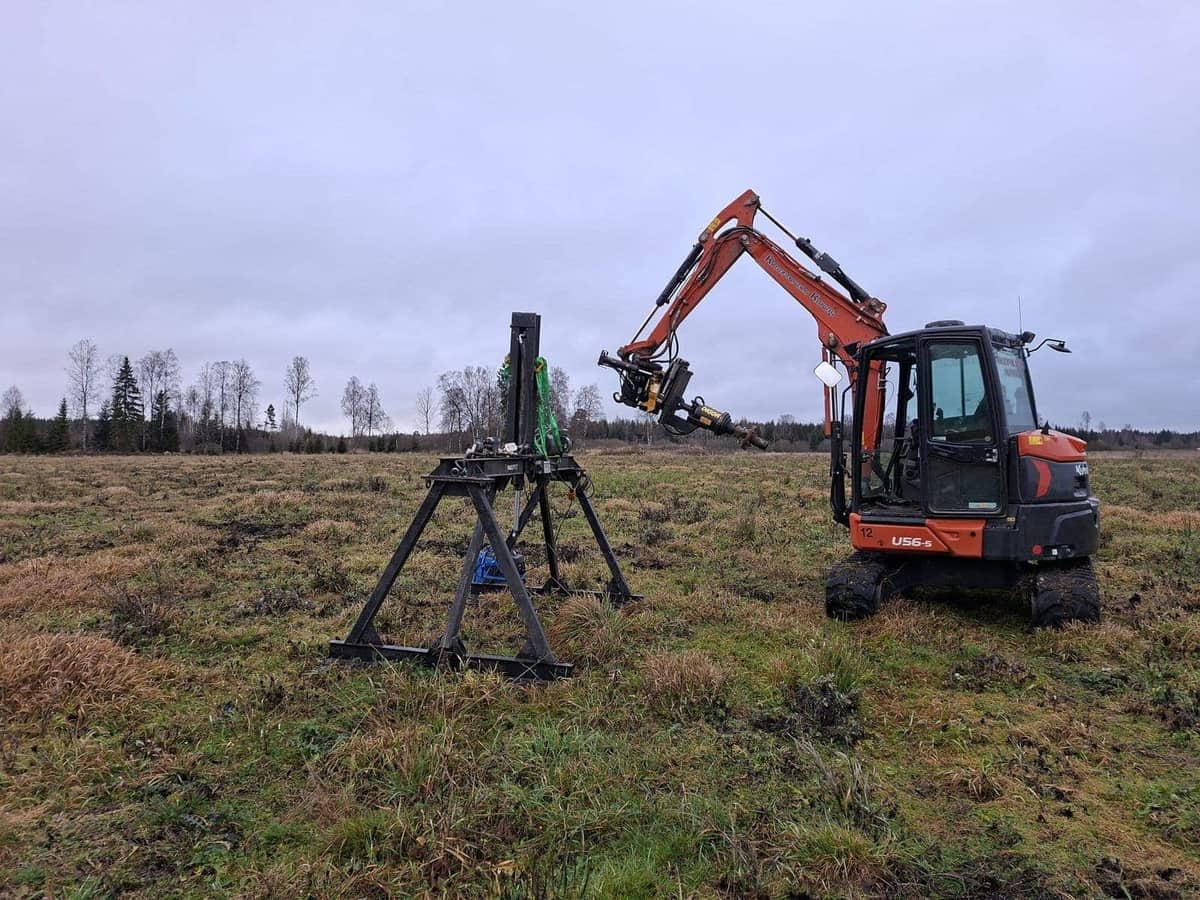
Solar foundation testing in Sweden 58 MEASUREMENTS · 3-ZONE STRATEGY
Sweden · November 2025
Solar foundation testing, Sweden

Ground testing & piling

Three-day campaign across soft clay and variable ground. 58 measurements produced a three-zone foundation strategy — turning an uncertain budget into a defendable figure for the financial model.

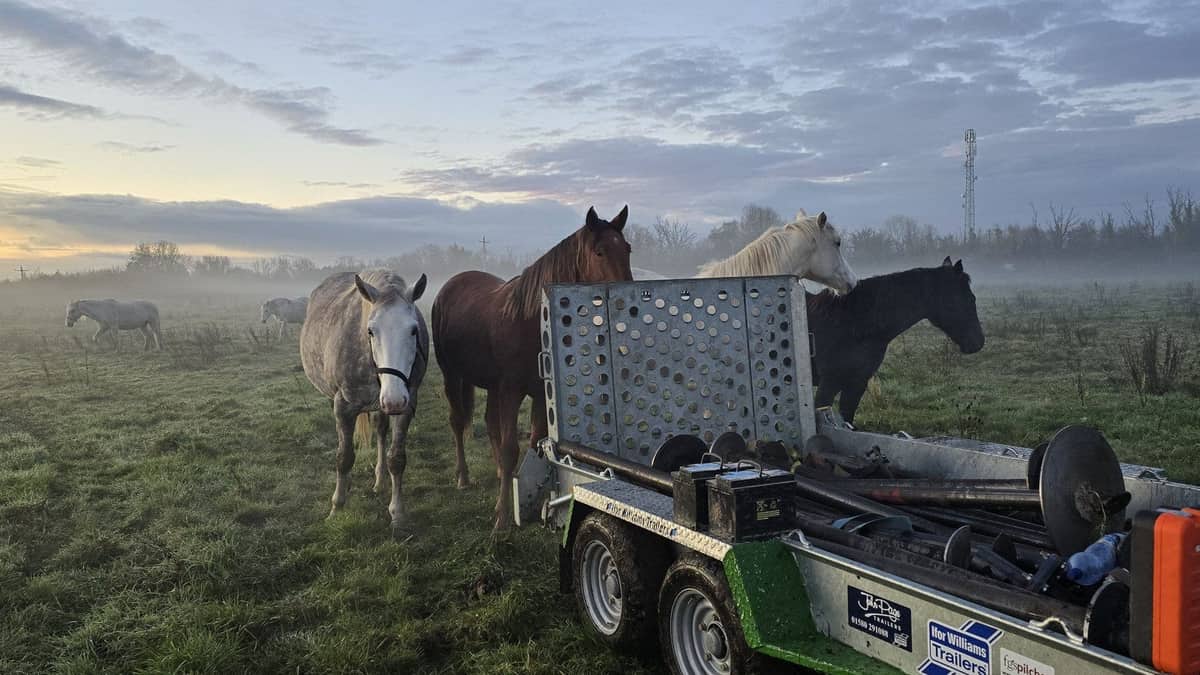
Solar foundation testing in Ireland 2-SIZE PILE · ~80% COVERAGE
Ireland · October 2025
Solar foundation testing, Ireland

Ground testing & piling

Three-day evaluation across fields and bog. Identified stony layer at 1.5–2.5 m and produced a two-size helical-pile design covering ~80% of the area — investor-grade cost certainty before EPC.

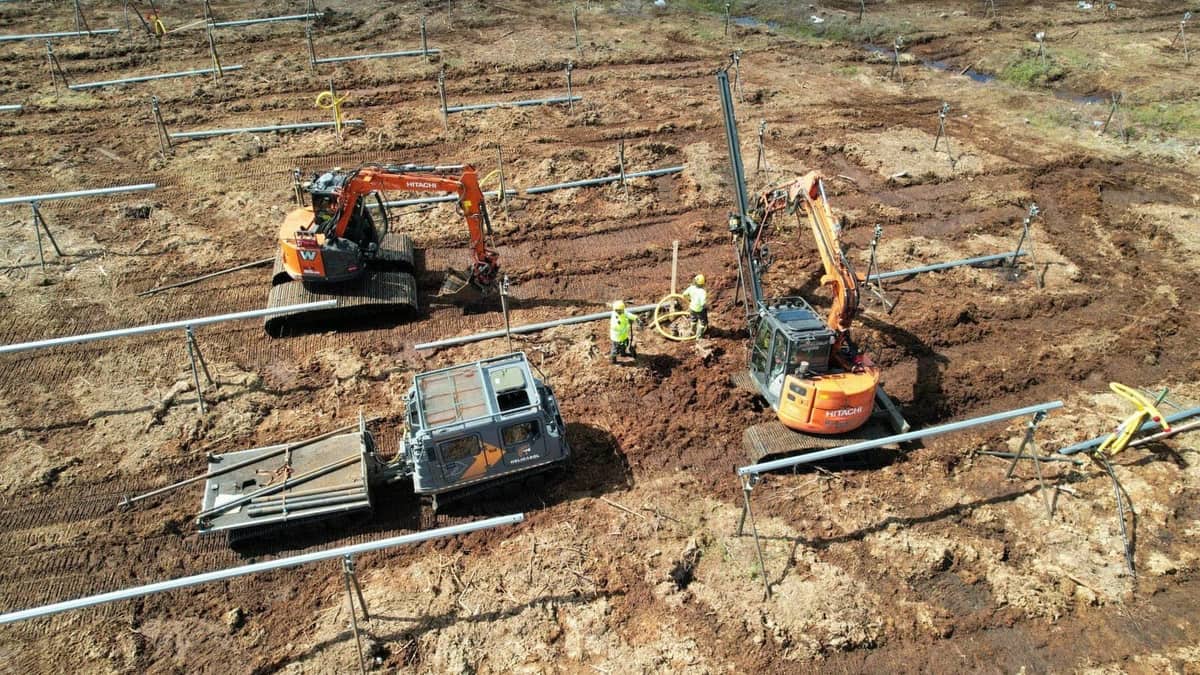
Hallanvahti Solar Park, Finland 71,000 PILES · 9 M PEAT
Finland · Tested 2024 · Delivered 2025–2026
Hallanvahti Solar Park

Joroinen · 129 MW / 200 ha

Initial test piling 2024 produced the foundation budget that held through delivery. 71,000 piles installed across 200+ hectares of peat as planned — testing translates to certainty at scale.

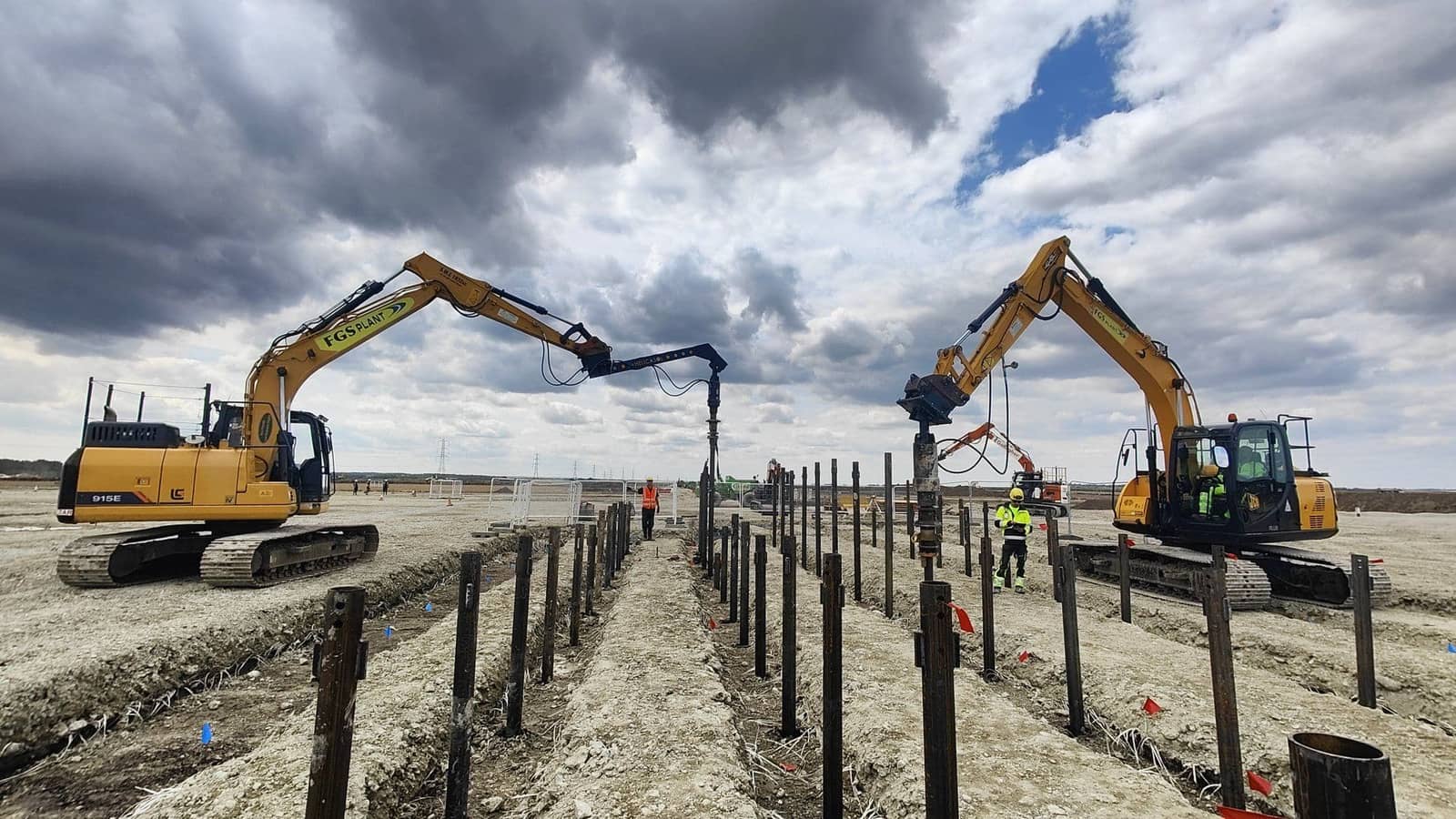
Cleve Hill electrical compound, Kent UK 1,000+ PILES · 373 MW
United Kingdom · 2023
Cleve Hill electrical compound

Kent, England · 373 MW grid connection

The UK’s largest operational solar park (373 MW). Foundation cost certainty in soft Kent clay — helical piles delivered on time despite protected species and unexploded WW2 ordnance constraints.

Methodology & standards
Eurocode 7  ·  EN 61773  ·  AC358  ·  ICE Specification for Piling & Retaining Walls
Talk to us

The Helicasol team at your service.

Get in touch

Tell us about your project.

Leave your details and we’ll reply within a few working days — straight to your inbox.

Goes straight to info@helicasol.com.

Ready for site-specific data?

Send us your project materials — we’ll reply with a feasibility opinion and a verified cost range within days. You take it into EPC tendering.

Heidi Hallenberg · Geotechnical Engineer